Mehmet Kerem Turkcan
Associate Research Scientist in Civil Engineering & Engineering Mechanics at Columbia University
I build AI systems that have to work outside the lab, where latency and reliability matter as much as accuracy. My research covers urban perception, medical robotics, machine learning systems, and computational neuroscience. I release much of it for others to build on: real-time detectors, open datasets and models, and research platforms. I also make independent games and films.
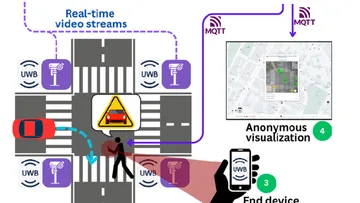
At the Center for Smart Streetscapes (CS3) and Civil Engineering & Engineering Mechanics at Columbia University, I lead machine learning projects from research prototype to deployed system. I created DART for real-time open-vocabulary detection and led UrbanOmniDetect and UrbanOmniView for calibration-free monocular 3D perception. For pedestrian and cyclist safety, I built bikeped and contributed to PAVE, and I led a city-scale study of congestion pricing using 910 public traffic cameras. This work also includes street-scale data pipelines, synthetic data generation, urban digital twins, and vision-language models on edge devices.
In medical robotics, I lead our work on surgical world models and also work on open datasets such as Open-H-Embodiment and on Surgical SAM 3.1 for segmenting instruments and anatomy. This builds on my postdoc work with Northwell Health collaborators, where I applied computer vision to robotic surgery and endoscopy training.
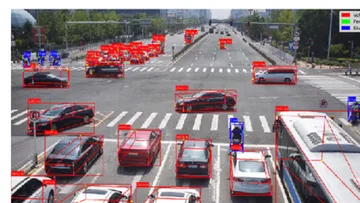
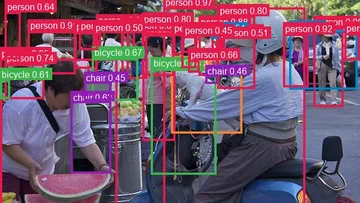
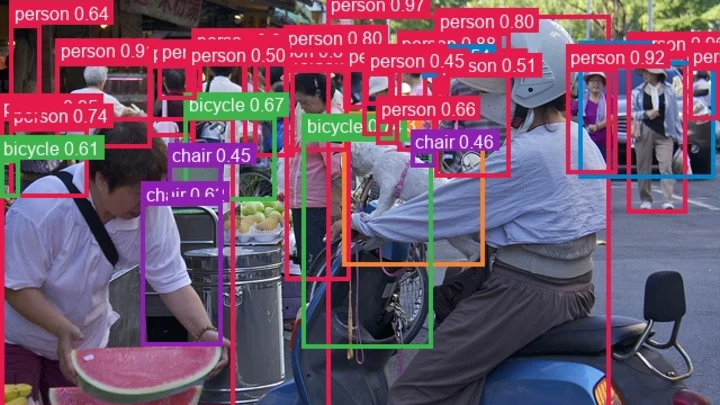 DART Open-vocabulary detection at deployment speed
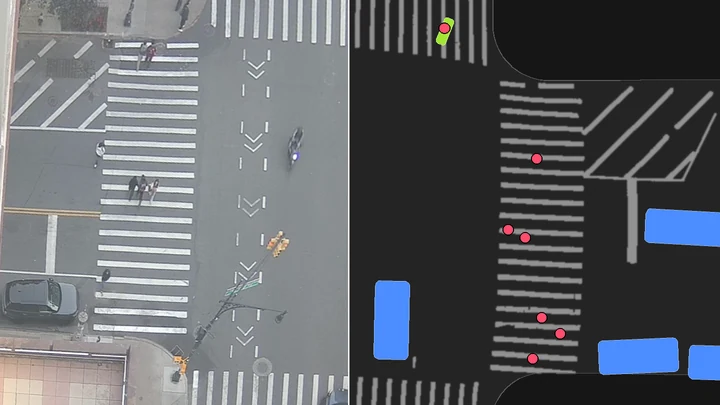
 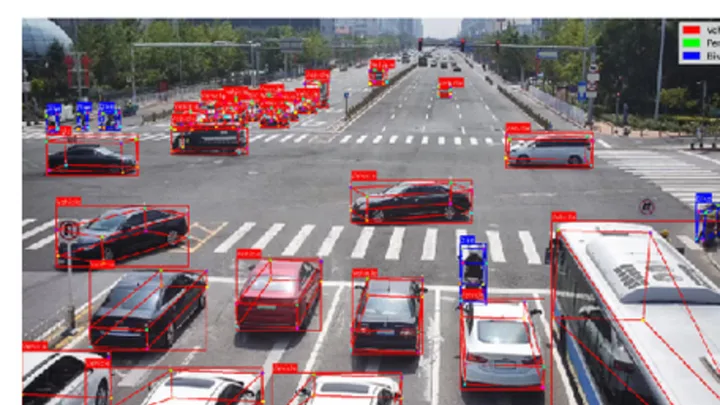 UrbanOmniDetect View-agnostic urban detection
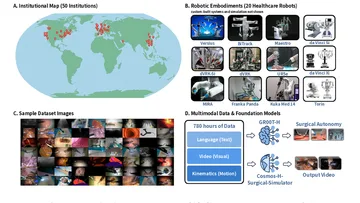
 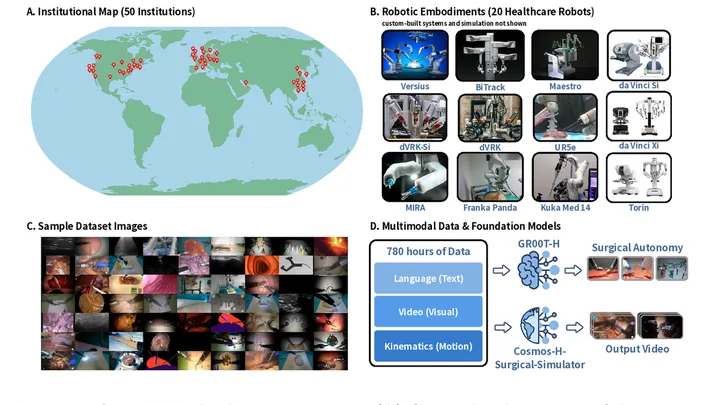 Medical Robotics World models and open datasets for medical robots
 Work and leadership
- Fielded AI systems: I lead multimodal perception projects whose sensing models are built to scale across 900+ New York City intersections and CS3’s three urban testbeds: COSMOS PAWR in New York City, DataCity in New Brunswick, and FAU MobIntel in West Palm Beach.
- Publications: My papers appear at CVPR, ICML, ACM UIST, ACM/IEEE SEC, IEEE INFOCOM, IEEE PerCom, and EDM, and in IJCV, eLife, and Surgical Endoscopy. Our paper on real-time video analytics for urban safety received the Best Paper Award at SEC 2025.
- Open-source systems: DART and generative-agents, two of my public AI systems, have 1,700+ GitHub stars combined.
- Sponsored research: I have contributed proposals, technical reports, sponsor reviews, and engineering to about $30M in research funded by NSF, DARPA, AFOSR, and Con Edison, with additional project support from NVIDIA and EmpireAI.
- Teaching and mentorship: I taught graduate deep learning courses at Columbia and have mentored Master’s, undergraduate, and high school researchers, six of whom went on to Ph.D. programs at Princeton, Toronto, UC Santa Cruz, and Columbia. I was also the main engineering instructor for the CS3 Research Experience for Teachers in 2024, 2025, and 2026.
My work on machine learning systems includes Loom, an analytical neural computer that runs compiled C programs inside a looped transformer. With students I mentored, I have also published on adaptive data collection for robust learning (ICML 2025), vision-language models split between cloud and edge, and the security of edge-cloud systems (USENIX VehicleSec 2026). Earlier, I wrote GPTune, a GPT-2 fine-tuning toolkit from the early public LLM era.
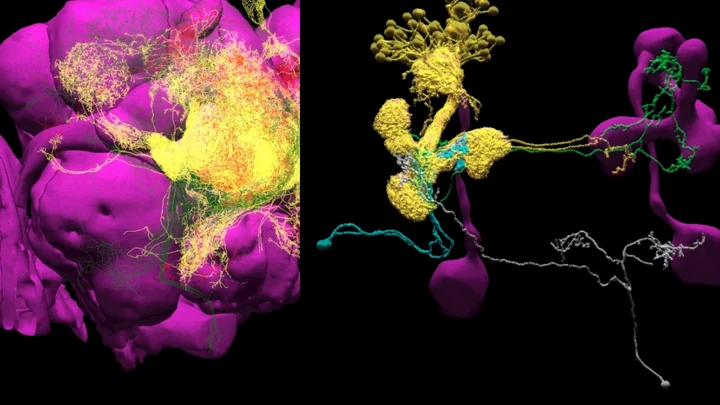
Before my current role, I was a postdoc at the AIDL Lab in Columbia’s Department of Electrical Engineering, where I also earned my Ph.D. My doctoral research was on the fruit fly brain: I co-designed and built FlyBrainLab, an open platform for exploring its circuits and an early prototype of today’s AI research workbenches. Its natural-language interface linked papers, ontologies, and a connectome knowledge graph to GPU simulation and interactive 3D visualization.
My game and film work with Wisedawn and KEDIKAT also feeds my research: experience with real-time engines and visual storytelling shaped simulation projects such as Boundless. KEDIKAT’s film FLEA received four festival accolades in 2026, including Best Storytelling Runner-Up at the MetaMorph AI Award.
News
| Oct 13, 2026 | Our paper, Newell-Car-Following-Model-Informed Gaussian Process Regression Model for Ultra-Short-Term Arterial Vehicle Trajectory Prediction, led by Noshin Saiyara Ahmad, has been accepted for publication in the Transportation Research Record. It predicts vehicle trajectories two seconds ahead, giving intersection safety alerts time to absorb sensing, communication, and reaction delays. On data from the DataCity Smart Mobility Testing Ground in New Brunswick, NJ, informing Gaussian process regression with Newell’s car-following model lowers overall RMSE by 17.5% to 47.2% relative to LSTM and TrajNet++. |
|---|---|
| Oct 12, 2026 | Our paper, Harnessing Floating Car Data, Traffic Camera Observations, and Network Flow Analysis for Traffic Volume Estimation, led by Antonina Kosikova, is now published open access in Discover Civil Engineering. It fuses floating car trajectories, municipal traffic camera observations, and network flow models to estimate and forecast traffic volumes across a Manhattan road network. |
| Oct 6, 2026 | Our paper, Harnessing Floating Car Data, Traffic Camera Observations, and Network Flow Analysis for Traffic Volume Estimation, led by Antonina Kosikova, has been accepted for publication in Discover Civil Engineering. The preprint is available on arXiv. |
| Oct 5, 2026 | Our preprint, Dynamic Minimax Regret Optimization for Robust LLM Post-Training, led by Chengbo Zang, is now on arXiv. Its DUCB-OGD algorithm pairs a discounted upper-confidence-bound sampler over data sources with online gradient descent, improving worst-group robustness across supervised fine-tuning, preference optimization, and reinforcement learning with negligible overhead. |
| Sep 28, 2026 | I will present our vision-based analysis of congestion pricing in New York City, built on 910 public traffic cameras, at the 2026 PAWR PI Meeting. The project was initially supported by compute from the PAWR COSMOS testbed at Columbia University. |
| Sep 24, 2026 | I posted Reinforcement Learning of Communication in a Mesh of Small Language Models on arXiv. It introduces TalkMesh, a decentralized mesh of small language model agents that learns when and what to communicate. Three agents that together generate at most six outputs reach the accuracy of majority voting over 32 samples, and at 32 agents the mesh raises Qwen3.5-0.8B’s GSM8K accuracy from 0.568 with self-consistency to 0.705. |
| Sep 24, 2026 | I released Valdrada, a city-scale digital twin of New York City compiled from public municipal records. It covers Manhattan, the Bronx, Brooklyn, and Queens with simulated traffic and pedestrians, pixel-exact segmentation and depth ground truth, and a CARLA-style Python API. An interactive demo runs in the browser. |
| Sep 23, 2026 | Our preprint, Surgical Kinematics from Monocular Video with Learned Articulated Motion Constraints, is now on arXiv. It reconstructs the position, orientation, and jaw angle of robotic surgical instruments from monocular video, pooling frozen DINOv3 features globally and at instrument landmarks from fine-tuned SAM 3.1 masks. Evaluated on 2,802 Open-H-Embodiment episodes, it lowers path-length error on the main benchmark from 0.45 to 0.34 cm compared with LiveMAE. |
Selected Publications
-
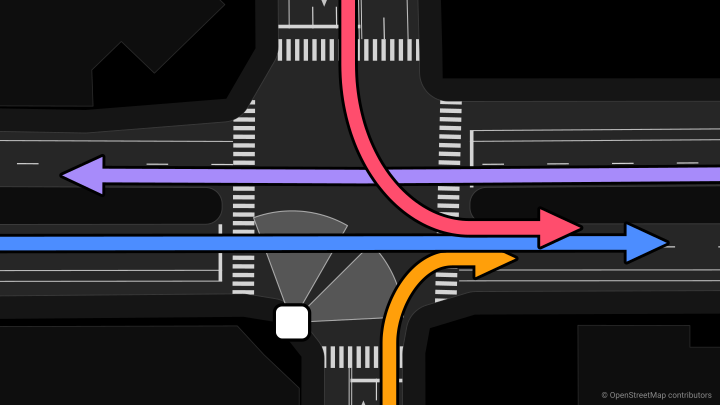 Newell-Car-Following-Model-Informed Gaussian Process Regression Model for Ultra-Short-Term Arterial Vehicle Trajectory PredictionTransportation Research Record, Oct 2026To appear